


Why I Won’t Condemn Hamas
Introduction: Beyond Media Performance In today’s political climate—particularly within the UK and the US—"condemning Hamas" has become a mandatory litmus test for entering public discourse. Political parties, such as the UK Labour Party, use this demand as a tool to smear and suppress those who expose Israeli state crimes. However, Professor Norman Finkelstein—a preeminent political scientist and the son of Holocaust survivors—refuses to participate in this performative ritual. Drawing on a lifetime of scholarship and a commitment to truth, he argues that the refusal to condemn is not a mere political pose, but a profound "matter of principle."
5/31/20263 min read
Introduction: Beyond Media Performance
In today’s political climate—particularly within the UK and the US—"condemning Hamas" has become a mandatory litmus test for entering public discourse. Political parties, such as the UK Labour Party, use this demand as a tool to smear and suppress those who expose Israeli state crimes. However, Professor Norman Finkelstein—a preeminent political scientist and the son of Holocaust survivors—refuses to participate in this performative ritual. Drawing on a lifetime of scholarship and a commitment to truth, he argues that the refusal to condemn is not a mere political pose, but a profound "matter of principle."
1. The Logic of Slave Rebellions: The Nat Turner Analogy
The cornerstone of Finkelstein’s argument is situating the events of October 7th within the historical trajectory of "slave rebellions." He points to the case of Nat Turner, who led the most significant slave revolt in American history in 1831. Turner’s primary order to his followers was to "kill all white people," and they proceeded to do so indiscriminately.
Finkelstein asks a pointed question: Does anyone today condemn Nat Turner? Despite the brutality of his actions, history remembers him as a "freedom fighter" and a "martyr" for justice. Finkelstein argues that, qualitatively, there is no difference between what Turner did and the actions of Hamas on October 7th. When a population is kept in a "death camp" or an "open-air prison" for decades, their violent eruption is a predictable consequence of human psychology and history, not something to be judged by those living in comfort and security.
2. Gaza: An Inquest into Martyrdom
Finkelstein speaks from a position of authority, having spent over 15 years meticulously studying every human rights report published on Gaza—documents that literally fill his bookshelves. His scholarship, including his book Gaza: An Inquest into Its Martyrdom, serves as a record of the daily atrocities inflicted upon the Palestinian people.
"When you see the atrocities visited daily on the people of Gaza," he asserts, "how can you possibly have the right to scold them?" From his perspective, Gaza has been systematically turned into a graveyard (the subject of his latest book, Gaza’s Gravediggers). In such a context, Finkelstein believes that issuing "condemnations" from a distance is an insult to the suffering of the oppressed. While he acknowledges that the actions may be "indefensible" in a narrow legal or abstract moral sense, he refuses to play the role of the moralist lecturing a slave who has broken his chains.
3. Breaking the Media Taboo: The Piers Morgan Challenge
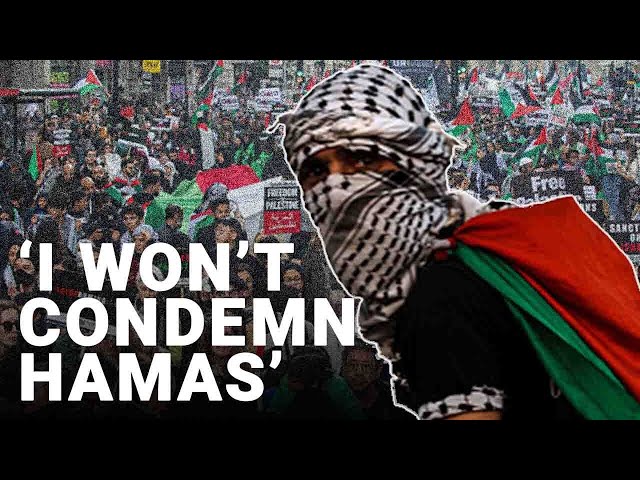
While many public intellectuals and commentators (such as Mehdi Hasan and others) immediately rush to condemn Hamas to preserve their media standing, Finkelstein chose a more difficult path. In high-profile appearances, such as on Piers Morgan’s program, he refused to provide the "standard response."
He views the question "Do you condemn Hamas?" as a trap designed to divert public attention away from the root causes: the occupation and the inhuman blockade. Finkelstein firmly declares: "You are not going to be able to wag your finger at me." By refusing to concede this ground, he forces the conversation back to the historical and structural reality of the conflict.
4. The Legacy of Chomsky and Moral Gravitas
Finkelstein credits Professor Noam Chomsky for instilling in him a sense of "moral gravitas." He emphasizes that politics is "serious business" because it concerns the sanctity of human life. Having come from a home where almost his entire family was exterminated in the Holocaust, Finkelstein does not treat life lightly.
However, it is precisely this reverence for life that compels him to stand against those who have destroyed the lives of Gazans for 75 years. He distinguishes between "posing for the cameras" and taking a principled stand. His refusal to condemn is not rooted in a desire for "likes" or "shares," but in a deep-seated refusal to trivialize the agony of those who have been pushed beyond the limits of human endurance.
Conclusion: Not on My Watch
Finkelstein’s final message is clear: "Are you going to scold a slave? No, that’s not going to happen on my watch." He maintains that anyone truly familiar with the history of Gaza and the scale of the crimes committed against its people has no right to lecture the victims on morality.
Finkelstein is willing to face political exile and smear campaigns rather than cede this principle. To him, October 7th must be understood as a rebellion against absolute oppression. As long as the world remains silent about the ongoing martyrdom of Gaza, he refuses to join the ranks of those who condemn the desperate revolt of the oppressed. His stance is not a defense of violence in the abstract, but a defense of "historical truth" and "human dignity" buried under a mountain of propaganda.