

Norman Finkelstein: ‘Trump Peeved at Netanyahu for Being Misled Over War on Iran’
An Analysis of the Strategic Deadlock Between Washington and Tel Aviv in the Middle East Norman Finkelstein, the prominent political scientist and author of seminal works such as The Holocaust Industry, has pulled back the curtain on the deepening crisis between Donald Trump and Benjamin Netanyahu. In a recent in-depth conversation with Amanda Brady on TRT World’s Round Table, Finkelstein argues that beneath the veneer of a "special relationship," a profound sense of frustration has taken hold in the White House regarding Israel's regional maneuvers.
6/26/20263 min read
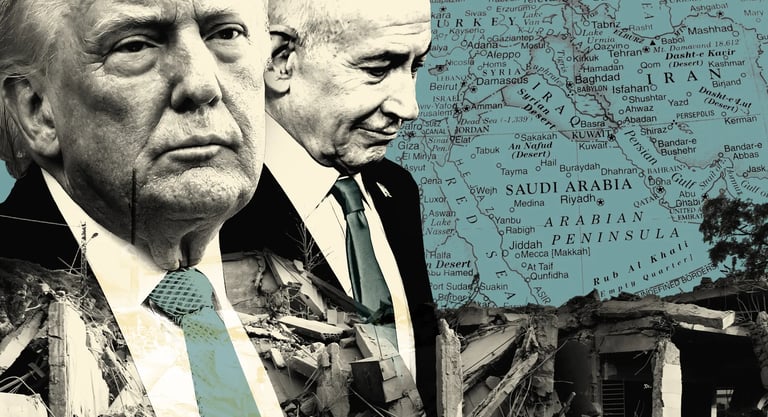
Norman Finkelstein: ‘Trump Peeved at Netanyahu for Being Misled Over War on Iran’
An Analysis of the Strategic Deadlock Between Washington and Tel Aviv in the Middle East
Norman Finkelstein, the prominent political scientist and author of seminal works such as The Holocaust Industry, has pulled back the curtain on the deepening crisis between Donald Trump and Benjamin Netanyahu. In a recent in-depth conversation with Amanda Brady on TRT World’s Round Table, Finkelstein argues that beneath the veneer of a "special relationship," a profound sense of frustration has taken hold in the White House regarding Israel's regional maneuvers.
Trump’s Irritation: When Calculations Fail
The core of Finkelstein’s argument is that Donald Trump is currently "peeved" at Netanyahu for providing flawed predictions and misleading intelligence that dragged the United States into a conflict far beyond its current management capacity.
According to Finkelstein, Netanyahu and his team operated on the assumption that a "decapitation strategy"—targeting leadership—combined with internal pressures would lead to a swift collapse of the Iranian regime. However, reality on the ground proved that these calculations were based more on political wishful thinking than objective intelligence. "Trump feels Netanyahu led him into a catastrophe," Finkelstein observes, "and as is his custom, Trump is looking for a scapegoat to blame for the failure."
Raw Violence vs. Strategic Sophistication
During the interview, Finkelstein offered a scathing comparison of the strategic capabilities of the opposing sides. He criticized the Trump administration for lacking a clear roadmap, relying instead on "raw physical violence." He noted that the rhetoric from U.S. officials—using a vocabulary of "obliteration" and "reduction to rubble"—betrays a lack of strategic depth beyond the application of force.
Conversely, Finkelstein described the Iranian response as highly sophisticated. He remarked that it is a "testament to the leadership" of what is considered a medium-rank country to be able to inflict such a strategic defeat on a global military superpower and its regional partner.
A Cabinet of "Sycophants and Sub-Mediocrities"
Finkelstein attributes much of this strategic failure to the internal structure of the Trump administration. With his characteristic wit, he suggested that Trump feels threatened by anyone with a "triple-digit IQ." Consequently, the President has surrounded himself with what Finkelstein calls "sycophants and sub-mediocrities."
He specifically questioned the qualifications of figures like Secretary of State Marco Rubio and Defense Secretary Pete Hegseth, arguing that such an inexperienced team is ill-equipped for their roles and easily manipulated by seasoned actors like Netanyahu.
Gaza: Beyond the Label of "War"
Finkelstein used the platform to reiterate his controversial stance on the situation in Gaza. He argued that using the term "war" to describe the events of the last two years is an act of "complicity with Israeli propaganda." In his view, there is no "battle" in the traditional sense; rather, it is a systematic effort to make the territory "unlivable."
He contends that Netanyahu’s objective from the beginning has been to "empty Gaza" by using mass starvation, water deprivation, and the targeting of medical infrastructure as weapons. He characterized temporary ceasefires not as humanitarian efforts, but as tactical maneuvers intended to pave the way for the "Saudi deal" and the Abraham Accords.
The Exit Strategy: A Quiet "Modus Vivendi"
When asked by Amanda Brady about Trump’s "exit strategy," Finkelstein predicted that the President would never openly admit defeat. Instead, he expects a "modus vivendi" (a temporary living arrangement) regarding the Strait of Hormuz.
"There will likely be a quiet, backchannel agreement to unlock the straits, and then Trump will simply let the issue vanish from the headlines," Finkelstein explained. He noted Trump’s peculiar ability to wipe major issues from the public consciousness almost overnight—much like his previous obsession with Greenland—thereby passing the strategic and financial burden to the next administration.
Conclusion
The interview paints a picture of a fractured alliance. From Finkelstein’s perspective, the U.S. reliance on raw force and Israel’s reliance on flawed intelligence have led to a strategic dead-end. The multi-billion dollar cost and the blow to American prestige have forced a reckoning, leaving the Trump-Netanyahu relationship in a state of unprecedented tension. As Finkelstein concludes, this is not a grand strategic victory, but the fallout of "homicidal mania" and profound incompetence.