


Expulsion by Genocide
Introduction: The Moment Silence Was No Longer an Option For many, October 7, 2023, was a geopolitical shock; for Norman Finkelstein, it was a moment when a profound intellectual responsibility fell upon his shoulders. Having spent decades studying the political history of Gaza with archival obsession, he knew the world would look to him for a position. Yet, unlike many academics who issued verdicts within hours, Finkelstein describes "sweating" for a week to determine exactly what needed to be said.
2/11/20264 min read
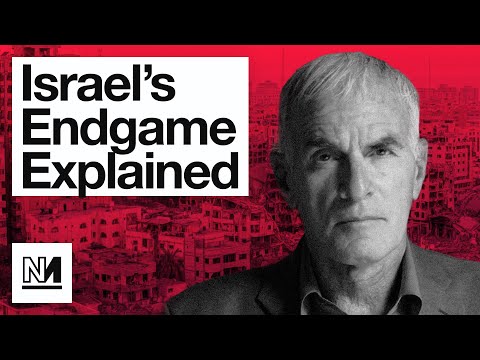
Expulsion by Genocide
Introduction: The Moment Silence Was No Longer an Option
For many, October 7, 2023, was a geopolitical shock; for Norman Finkelstein, it was a moment when a profound intellectual responsibility fell upon his shoulders. Having spent decades studying the political history of Gaza with archival obsession, he knew the world would look to him for a position. Yet, unlike many academics who issued verdicts within hours, Finkelstein describes "sweating" for a week to determine exactly what needed to be said.
This delay was not a sign of political hesitation, but rather a testament to how seriously he regards the weight of moral judgment.
Part I: The Problem of Judgment—Why "Facts" Are Not Enough
One of Finkelstein’s most critical claims is that facts do not automatically lead to moral conclusions. He indirectly invokes a classic debate in political philosophy: the gap between "is" and "ought."
He accepts the factual record:
* Approximately 1,200 people were killed;
* Roughly 800 of those were civilians;
* The event, from a human perspective, was horrific.
However, his question is this: Do these data points automatically necessitate a political condemnation of Hamas?
Finkelstein argues that between fact and verdict, there is a stage called the faculty of judgment—a missing link he believes even his mentor, Noam Chomsky, rarely explicitly acknowledged. In other words, one can recognize an event as tragic while maintaining a different political judgment regarding the actors involved.
Part II: Historical Analogy—From Nat Turner to Gaza
To clarify his stance, Finkelstein draws upon the 1831 rebellion of Nat Turner—an enslaved man who organized an armed revolt against white slaveholders, giving the order to "kill all white people." In that rebellion, women and children were also killed.
Today, a significant portion of American academia hails Nat Turner as a hero of resistance. Finkelstein asks: If a person is born into a condition where their destiny is "to live and die in slavery," can their violent rebellion be condemned outside of its historical context?
He places Gaza within this framework:
* A generation born into a blockade;
* No possibility of exit;
* A collapsed economy;
* The failure of all diplomatic, legal, and non-violent efforts (including the Great March of Return).
In this light, he argues that one may critique the act, but to condemn the actor without considering the "structure of historical incarceration" is a fallacy.
Part III: The Israeli Project—From Expulsion to "Making Gaza Uninhabitable"
Finkelstein’s analysis of Israeli strategy is multi-layered:
1. Primary Goal: The expulsion of the population into the Egyptian Sinai. According to him, this failed due to Egyptian opposition.
2. Secondary Goal: Rendering Gaza uninhabitable through the destruction of infrastructure, a total blockade on food, the dismantling of the healthcare system, and widespread residential leveling.
The ultimate result, he argues, is a choice forced upon the people: "Stay and starve, or leave."
Part IV: Genocide or Ethnic Cleansing?
One of the most complex parts of Finkelstein’s argument is his legal analysis. Under the 1948 Convention, genocide requires the "intent to destroy, in whole or in part," a national, ethnic, racial, or religious group. Critics argue Israel’s goal is not the physical destruction of Palestinians, but their removal (ethnic cleansing).
Finkelstein counters: If a state is prepared to employ mass physical destruction—reaching the brink of total annihilation—to achieve the goal of ethnic cleansing, then the element of "intent" in the definition of genocide is met.
He defines this as "genocide as a means to achieve ethnic cleansing." Furthermore, he points to a chilling lack of shame or secrecy in the public discourse, contrasting it with historical atrocities where perpetrators often sought a "moral alibi."
### Part V: Israeli Society and the Question of Collective Responsibility
Finkelstein points to polling data suggesting that principled opposition to the Gaza operation within Israeli society is minimal. He argues that the massive protests seen in Israel were primarily focused on the fate of the hostages, not on the morality of the military operation itself.
Here, he enters controversial territory: Is what is happening merely the policy of a government, or is it a reflection of a social consensus? While he avoids a definitive answer, the picture he paints is one of a profound moral crisis.
Part VI: The Crisis of Hope in the Contemporary Left
Perhaps the most significant difference between Finkelstein and previous generations of the Left lies in his rejection of "historical inevitability." He does not subscribe to the teleological optimism of Mao, the "arc of the moral universe" of Martin Luther King Jr., or Rosa Luxemburg’s faith in the "subterranean forces of history."
He states bluntly: Gaza may be gone. History is littered with nations that have been utterly decimated.
So, what drives him to continue? His answer is simple yet radical: "I don't want to get adjusted to this world."
This is not historical optimism or political mysticism; it is a form of negative ethics—a refusal to participate in or acquiesce to an order he deems monstrous.
Part VII: The Intellectual, Data, and Responsibility
Finkelstein does not view himself as a media personality. He wishes to be remembered for his "intellectual effort to understand complexities," not for viral clips or his Jewish identity.
He emphasizes that his work should be judged:
* Not as a "Jewish critic of Israel";
* Not as a "son of Holocaust survivors";
* But as someone who has strived to extract truth from a mountain of data through sheer "perspiration."
Conclusion: Ethics Without a Guarantee of Victory
Finkelstein’s position can be summarized as follows:
1. Moral condemnation without historical analysis is incomplete.
2. Israeli strategy contains the constituent elements of genocide, even if the ultimate objective is ethnic cleansing.
3. Ethical action does not require faith in victory; it is enough to refuse to adapt to injustice.
He offers no promise of liberation, nor does he express faith in the "just cause that is bound to win." His stance is not born of religious hope, but of a resolute refusal to normalize the unacceptable.