

Smashing Idols in the Age of Propaganda: An Analysis of Norman Finkelstein's Views on Gaza and International Law
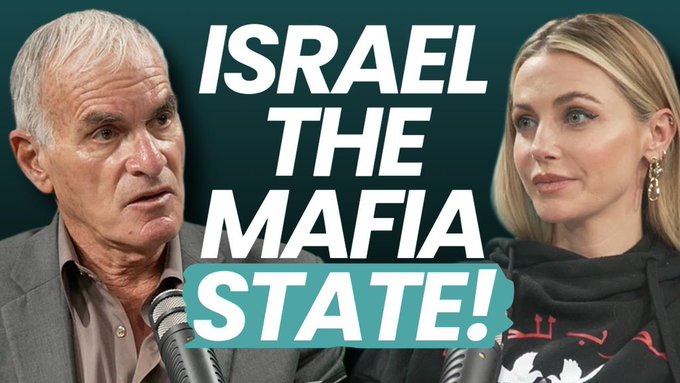
In an era where the world is witnessing deep political and ethical rifts, and dominant media narratives are in starker contrast with ground realities than ever before, the voice of Norman Finkelstein—a prominent political scientist and the son of Holocaust survivors—acts as a surgical scalpel dissecting Israeli policy and the new world order. In a recent interview, moving beyond superficial analysis, Finkelstein presents a shocking picture of the "industry of lies," the inefficacy of international institutions, and what he terms "Jewish supremacy." This article, based on his remarks, examines three main axes: the weaponization of international law, the verification of claims regarding sexual violence on October 7th, and the nature of the US-Israel relationship.
12/10/20254 min read

Smashing Idols in the Age of Propaganda: An Analysis of Norman Finkelstein's Views on Gaza and International Law
In an era where the world is witnessing deep political and ethical rifts, and dominant media narratives are in starker contrast with ground realities than ever before, the voice of Norman Finkelstein—a prominent political scientist and the son of Holocaust survivors—acts as a surgical scalpel dissecting Israeli policy and the new world order. In a recent interview, moving beyond superficial analysis, Finkelstein presents a shocking picture of the "industry of lies," the inefficacy of international institutions, and what he terms "Jewish supremacy." This article, based on his remarks, examines three main axes: the weaponization of international law, the verification of claims regarding sexual violence on October 7th, and the nature of the US-Israel relationship.
1. The Illusion of Progress and the Decline of Critical Thinking
Finkelstein begins his analysis with a pessimistic view of the concept of "progress." Identifying as a child of the 60s and influenced by revolutionary leftist movements, he believes that every technological step forward has been accompanied by a regression in the depth of thought. While the new generation is equipped with powerful tools for accessing information, in his view, they often "mistake a tweet for an argument."
This erosion of critical literacy has paved the way for a more effortless acceptance of propaganda. In a world lacking the patience for reading complex texts, the war of narratives is won not by logical arguments, but by selective imagery and sensationalist headlines. However, he acknowledges that this same young generation, facing an uncertain future, is ethically "more serious" than previous generations and holds high potential for grasping the truth.
2. International Law: A Weapon in the Battle for Public Opinion, Not a Savior
A key pillar of Finkelstein's thought is his instrumental view of international law. Unlike liberals who hold a quasi-religious faith in institutions like the International Court of Justice (ICJ) or the UN, Finkelstein believes we must not make idols of these bodies. He emphasizes that international law is only valuable when utilized as a "weapon in the battle for public opinion."
He points to a recent example: the ICJ ruling that Israel is "plausibly" committing genocide. Although this ruling has had no immediate material impact in stopping the bombing, it has severely damaged Israel's moral legitimacy. Finkelstein highlights the scandal involving Joan Donoghue, the former president of the court, who attempted to distort the court's explicit ruling in the media (BBC)—an action that demonstrates the power of these rulings and the fear Israel’s defenders have regarding their legal and reputational consequences.
Thus, while international institutions operate under immense US pressure (including threats of defunding), their rulings can still shake the foundations of Israel's "impunity."
3. Dissecting the October 7 Narrative: The "Rape" Hill and the Absence of Evidence
A controversial yet precise portion of Finkelstein’s remarks is dedicated to scrutinizing Israel’s claims of "systematic and gang rape" by Hamas on October 7th. Referencing official UN and Amnesty International reports, he exposes glaring contradictions.
According to the report by Pramila Patten (UN Special Representative), the investigative team had access to 5,000 photos and 50 hours of video from various sources (CCTV, body cams, mobile phones, etc.). Yet, the report’s conclusion is astounding: "Not a single direct image of sexual violence exists."
Finkelstein’s argument is simple and logical:
* How is it possible in the modern age, where everything is recorded by mobile phones, and while attackers filmed other crimes, that no images exist of rapes allegedly committed in "open spaces"?
* Why, unlike Palestinian women who courageously testify about abuses, has no living victim in Israel stepped forward to testify?
* Why did Israel, contrary to standard procedure, not allow for forensic investigations and instead rush to bury the bodies?
Finkelstein concludes that Israel decided to make "rape" the hill it would die on—its critical propaganda red line—to prepare public opinion to justify the genocide in Gaza, even though field evidence does not support this claim. Conversely, there is solid evidence of torture and sexual abuse of Palestinians in Israeli prisons, which is met with global silence.
4. The Strategy of "Deterrence" and the Cleansing of Gaza
From a geopolitical perspective, Finkelstein argues that the current war is not merely a reaction to October 7th, but a joint effort by Israel and the US to restore Israel's "deterrence capacity." The myth of Israel’s invincibility and intelligence dominance collapsed on October 7th, endangering its status as a "strategic asset" for the US in the region.
Netanyahu’s goal extends beyond "mowing the lawn" (Israel's military term for periodic limited operations); he aims for a final resolution of the Gaza question through the total destruction of life-sustaining infrastructure and ethnic cleansing. The US supports this as long as the violence does not hinder the "Abraham Accords" and normalization with Saudi Arabia. Whenever Israel’s actions threaten US strategic interests (such as relations with Qatar and Saudi Arabia), Washington reminds them of red lines, yet remains complicit in the overall genocide.
5. Jewish Supremacy and the Rift in the Global Community
In his psycho-social analysis of Israeli society, Finkelstein employs the term "Jewish Supremacy." He views Netanyahu not as an anomaly, but as the true embodiment of Israel's collective spirit—a society where, according to polls, half explicitly support the genocide, and a vast majority believe there are "no innocents" in Gaza.
This sense of supremacy, bolstered by economic power and the immunity derived from the Holocaust, has now reached a stage of "morbidity" that justifies the killing of children and the manufacturing of famine.
However, the hopeful note in his analysis lies in the rift emerging within the American Jewish community. The fact that 40% of young American Jews, despite intense propaganda bombardment, now admit that Israel is committing genocide indicates the failure of the Zionist monopoly on the narrative.
Conclusion
In this conversation, Norman Finkelstein paints a picture of a world where institutions of power and law are not sanctuaries of justice, but battlefields. He reminds us that to understand the truth about Gaza, we must not wait for international saviors. Instead, we must stand firm against the massive propaganda machine by arming ourselves with "documented facts" and making smart use of legal tools. His final message is clear: Israel’s credibility and narratives have collapsed, and it is the duty of the new generation to seize this opportunity to end decades of injustice.